I want to live in Sardinia – answering your questions

Jennifer Avventura My Sardinian Life (8)Once in a blue moon this little blog receives an email about the cost of living in Sardinia, Italy and today I am answering one readers email.

Dear JP,

Thank you for your kind words, I appreciate that you follow along My Sardinian Life and I hope I can shed some light on your decision to move to Sardinia, Italy.

Your questions answered:

“Based on various information, most importantly your blog, it seems to me living a simple life in Sardinia would cost us (couple with a little one on the way) 12K€ per year. That is, including rent, insurance, food, transport (thankfully we can drive since we’re EU), etc. There doesn’t seem to be any rent under 350 euro/month on the various immo web sites, insurances would add a hundred, 400 for food, 50 for gas, leaving a hundred for the rest & incidentals. Seeing the GDP per capita is less then 20K, it seems to me that jobs paying 1000 net per month are not to be found on Sardinia. So my first question would be: do you think we are completely off the charts with our budgeting 12K/yr for a simple life in Sardinia?

Searching for the simple life in Sardinia can be done but will need patience and hard work.

Rent

Any apartments closer to the sea will cost you more. If you move away from the sea even just 15 minutes you can lower your monthly rent by a good €50. Also, don’t be afraid to haggle with your landlord about prices. If you decide to move to Sardinia in the middle of August expect rent to soar! Try moving here sometime between September – March when most rentals are empty.

Food

We are a two person household and I spend about €120 a week on groceries. This includes: food, cleaning supplies, toilet paper, paper towels, shampoos & soaps. Food is expensive in Sardinia. Yesterday my husband came home from the local farmers with: 3 melons, 2 watermelons, a crate of figs, 2 onions, one giant peach, 4 cucumbers and 5 zucchini, he paid €25 – at a discounted rate.

Gas

Gas is cheaper in the larger cities like: Sassari, Tempio, Cagliari and Nuoro. If you find yourself in an out-of-the-way little town with a car running on fumes expect to pay at least .20c more. We live in a small little town and if I look out my window I can see the price of gas: €1.77 a litre.

Jobs

I work in the hospitality industry which is very seasonal (only two months a year) in Sardinia and I make €1500 a month. This is because I have over 23 years experience serving the public and I speak English. I would never settle for €1000 a month. Others that are doing the same job as me are making between €1000 – €1700 a month. Be ready to haggle for your salary like I have done.

In the off-season I teach English to school aged children and I charge €15 an hour. Those with a degree in English charge anywhere from €20 – €45 an hour.

Do I think you are completely off the charts with budgeting 12K/yr for a simple life in Sardinia? No. But I would try to find a job considering you have a little one on the way.

Like you our Italian is cosicosi, then again, we’d need to speak the local dialect more then Italian. You say on your blog for the kind of jobs you are looking for you need Italian. I’m wondering, how well does one get away with basic Italian in daily life? Outside of your town, are you being looked at as a tourist as soon as you “open your mouth” and being treated as a tourist, or is integrating with the locals and being treated as one feasible? What is your experience having lived there a few years? Can one feel “at home” after a while and be treated as “a local”?

I don’t speak the local dialect to anyone but my husband and nor should you. Most locals are offended if you speak dialect. Study Italian and study a lot. Every Sardinian speaks Italian and will understand you when you are at their shop ordering chicken cutlets for dinner. Learning and understanding the dialect will come with time and patience but its most important to learn Italian first. Just forget that a local dialect even exists.

I’ve now been in Sardinia 5.5 years. The first year(s) I was treated like a tourist but that soon faded when the locals saw my face every morning in their shops. I am now considered half Sardinian and I have integrated myself into their lives with much patience, understanding and a few flubbed upped words. Locals are more curious about your life and who you are. They are very welcoming, kind and completely honest but you must make the first move. Be sure to say buongiorno when entering shops even if you don’t see anyone.

Well JP, I hope this answers your questions. Please fell free to add any more questions in the comment section below.

And to any of my Sardinian followers: if you have any insight for JP and his family please speak up.

Kind regards

Jennifer Avventura
Sardinia’s Deadly Streets

car-accident-collision-mdFrom my safe, comfortable living-room I can hear ambulance sirens ring out, and I hope this time nobody has lost their life but it’s never that easy in Sardinia as every summer hundreds of people die on Sardinia’s deadly streets.

The statics are staggering, sad and preventable: every year day hundreds of people die on the streets of Sardinia from speed alone. The period between May to September is the worst time for street accidents as the roads are full of tourists who do not know how to drive on these curvy mountain roads.

Below are a few links related to deadly car accidents in Sardinia.

Car accidents in Sardinia a complete up-to-date list of road accidents in Sardinia.
Two dead in car accident in Sardinia
massacre on the streets of Sardinia: Two dead in Badesi
Sardinia – the cold, the wind, the sun … the car accident.

Most accidents in Sardinia are speed and alcohol related. Most of these accidents take the lives of innocent people who were just out for a morning ride on their Vespa.

Here are a few pointers on how to drive and stay alive in Sardinia

  • Wear your seatbelt at all times
  • Know the rules of the road for the country you are in
  • Use caution
  • If you are lost, pull-over and ask for directions
  • Don’t allow yourself to become distracted by Sardinia’s beauty while driving
  • Keep your eyes on the road
  • Use a GPS or a passenger to help with maps and directions
  • Allow the speeders behind you to pass by slightly yielding to the right
  • Never drink and drive. Ever!

On August 17th, 1997 I was pulled over for speeding and the police officer gave me two choices:

  1. Pay the hefty $500 speeding fine, or
  2. Go to an eight-hour lecture on road safety at the local university.

I choose option number 2, as on August 19th I was headed to Australia for a year of backpacking and I needed that $500 to help support my nomadic lifestyle.

8473283-illustration-seamless-pattern-car-crashThe lecture was a lecture of the best kind; complete with a slide show of the after effects of speeding and alcohol related accidents. I saw photos of cars that were demolished beyond recognition, photos of people with blood running down their face and even of people dead in their car, on the side of the road, in a tree, bush and on the other side of the highway. I was scared. Scared to death to speed again.
After that lecture as I was driving home slightly under the speed limit, I saw the aftermath of a car accident, a truly strange coincidence. It must have happened only seconds before my arrival as I saw people crawling out of the median ditch with blood splattered faces, their cars upside down, smashed and demolished. At that moment fear took hold of me and I vowed to never speed again.

It’s not possible for me to write only about the glitter and sand in Sardinia when there’s a whole other truth to be told.

Don’t let the sirens from an ambulance be the last thing you hear while on vacation in paradise.

Don’t drink and drive. Arrive alive.

8 things you should know before moving to Sardinia, Italy

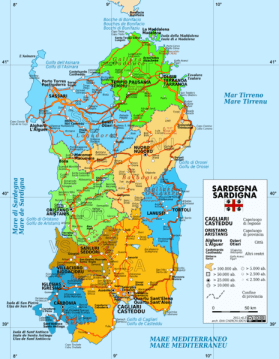
Sardinia_MapThis blog My Sardinian Life receives daily hits from people looking to move to Sardinia, Italy. So, I’ve compiled a little list for those out there searching for a life less ordinary in paradise. The search engine terms which brought people to my little blog are always written in English: Sardinia cost of living, move to Sardinia, jobs Sardinia and so on.

Canada, England, Australia and America want ‘in’ on this little island secret but before you pack your bags, take these pointers into consideration. My intention with this post is to put into perspective what day-to-day life is like on the most stunning island in the world – Sardinia, Italy. Disclaimer: these are just my opinions.  Continue reading

When is the best time to visit Sardinia?

Sardinia is known for its long summer, turquoise coloured warm waters, 200 days of sunshine and an average yearly temperature that will melt any Canadian’s heart. So, when is the best time to visit this magical island in the Mediterranean?

Average Monthly Climate in Sardinia, Italy

Average Temps Sardinia-page-001

Let’s break the year up into groups of four to see what it really looks like in Sardinia.

January-March

These three months are the coldest, wettest and most windy of the year. Locals busy themselves collecting wood to keep them warm during the drabbest months of the year.

April – June

This is my favourite time of year in Sardinia, the birds are singing and the town is filled with smiling happy people and the temperatures are warm enough for jeans and a t-shirt. It’s also the time for my favourite Sardinian festival of the year – Cavalcata Sarda.

July – September

These three months are undoubtably the hottest and busiest of the year. The sun is shining all day, every day and the beaches are filled with global beach goers. It’s the perfect time to chill seaside with the perfect novel.

October – December

October and November are iffy months. We’ve been known to spend an afternoon on the beach in November while the following day is filled with thunder, hail and lightning storms.

When will you visit Sardinia?

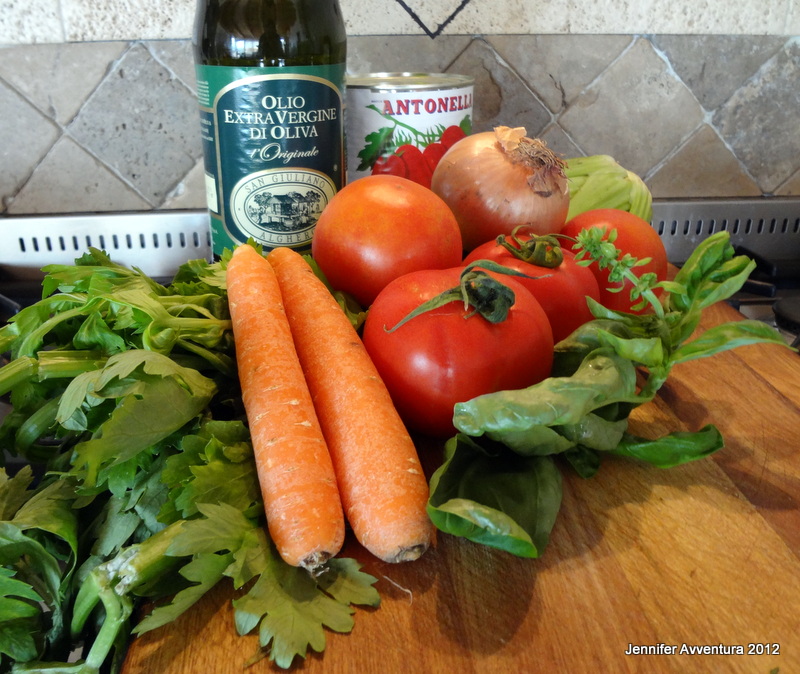
How to Make Tomato Sauce Like an Italian

I always thought tomato sauce came from a can, jar or my Mother’s kitchen. It never occured to me that people took the time to make this savoury sauce from scratch and not poured from a can. I can proudly say that I have finally mastered the fine art of Italian tomato sauce, and with all good Italian things, one requires patience and persistence.

If this is your first time making tomato sauce, I wish you luck and I hope my step-by-step photo guide helps.

I love Italian cooking and eating. I am a Canadian, who learned the fine art of Italian tomato sauce by trial and error, and a lot of questions. And this is what I came up with, I hope you enjoy.

How to Make Tomato Sauce Like an Italian

Continue reading

How to Arrive in Sunny Sardinia, Italy

Sardinia is the second largest island in the Mediterranean, and has three international airports which service major cities in Italy and many other European destinations like: Spain, England, Ireland and Germany.

International Airports in Sardinia, Italy

  1. Alghero Airport (AHO)
  2. Oblia Airport (OLB)
  3. Cagliari-Elmas Airport (CAG)

Airlines with direct routes to Sardinia from Europe:

  1. Meridiana Fly – is based in Olbia, Sardinia. Meridiana connects the traveler to major cities in Italy, Germany, Spain, England, France and Russia.
  2. EasyJet is a British airline with its headquarters at the London Luton Airport. EasyJet services Sardinia with Gatwick-Olbia and Stansted-Cagliari flights.
  3. Ryanair is Europe’s leading discount airline. Daily flights from all over Europe to Alghero and Cagliari.
  4. Alitalia is based in Fiumicino, Italy and operates at Rome’s major international airport Fiumicino (FCO). Alitalia connects to many major large cities around the world. Alitalia connects the traveler, daily to Sardinia through: Olbia, Alghero and Cagliari.
  5. SmartWings is another low cost airline based out of Prague. They have direct flights from Prague to all three main airports in Sardinia.
  6. British Airways offers charter flights in collaboration with Sardatur Holidays from London Heathrow/Manchester to Olbia/Cagliari.

By Sea:

  1. Moby Lines offers daily voyages from these Italian mainland ports: Livorno, Piombino, Genova, Civitavecchia, Bonifacio to Olbia, Santa Teresa di Gallura, and Porto Torres.
  2. Tirrenia offers daily ferries between mainland ports in Italy and Sardinia. Routes include: Porto Torres-Genova, Cagliari-Palmero, Cagliari-Napoli, Oblia-Civitavecchia, Oblia-Genova, Arbatax-Genova and Arbatax-Civitavecchia and many more!
  3. Corsica Ferries offers crossings from Santa Teresa di Gallura to Bonifacio and Olbia to Livorno.

Safe and Happy Travels.

*Please note: during the off-season months some routes and timetables may change. Please check with your carrier of choice for further details.

How will you arrive on this magnificent island in the Mediterranean?

VIDEO – Eating the Head of a 12LB Sardinian Snapper

I few months ago I wrote a post titled: How to Eat a 12lb Sardinian Snapper. Today, I have added the video. Watch one of my Sardinian friends dig into this massive head.

Do you have the courage?

How to Hunt for Wild Sardinian Asparagus

Three and a half years ago I went on my first asparagus hunting excursion, it was painful. I came home with squinty eyes and a headache and vowed never to do it again.

The first few years was like trying to find a needle in a haystack. I actually detested going out, but that waned with each new dish prepared. Now, I am a pro. Yes, a pro-asparagus hunter and I love each moment.

Follow me on a voyage to hunt for one of Sardinia’s wild vegetables.

How to Hunt for Wild Sardinian Asparagus

Continue reading

How to make a Bamboo Ladder | DIY

I’ve never been good at designing things or working with my hands, despite the fact that I enjoy working with my hands. However, generally the outcome is not what I had imagined at the beginning. So, maybe you can imagine my joy when I finally put my latest idea to the test.

Bamboo is a wonderful, quick-growing, giant, versatile plant that grows in abundance in Sardinia. One year ago Hub was heading into the mountains with a friend. I asked him to collect me some wild, Sardinian bamboo. He came back with half a truck load.

Continue reading

The Rule of Thirds | Understanding Photography

Photography has been a hobby for some years and I’ll be the first to admit that I know nothing of this snappy profession. What I do know is that I love to take pictures, of anything, and everything.

A few days ago I went shutter happy on some beautiful cows and calf’s in the hilly mountains of Sardinia, Italy. I then asked for some advice.

Michele over at Our Italian Table offered me the best advice a beginner could ask for!

The Rule of Thirds – A Beginners Guide

  • When you look through the viewfinder, or the LCD display on the back of your digital camera; imagine a perfect tic-tac-toe board displayed. (Most digital cameras have a grid setting which will display the grid automatically for you … hey, I found mine, you can to.)
  • The first horizontal line, at the top is the Eye Line. This is where you put your subject’s eye, line.
  • The second horizontal line, at the bottom is the Horizon Line. This is where you want to level your horizon.
  • You can play with the horizon on both horizontal lines, it all depends on what type of photography you wish for the final picture.
  • A high horizon line creates depth in the photo.
  • A low horizon line helps eliminate boring foregrounds.

Rule of thumb

The experts agree, if you want a dynamite photograph that pops out from the page, or a photo that expresses justly a moment in time – then do not center your subject in the middle of your grid.

By centering the subject in the middle of the grid, you are creating a static photo. A static photo has no depth, movement or flow. A static photo is boring, and who wants boring? I don’t.

Remember …

Continue reading