Nuraghe Miuddu, Birori, Sardegna
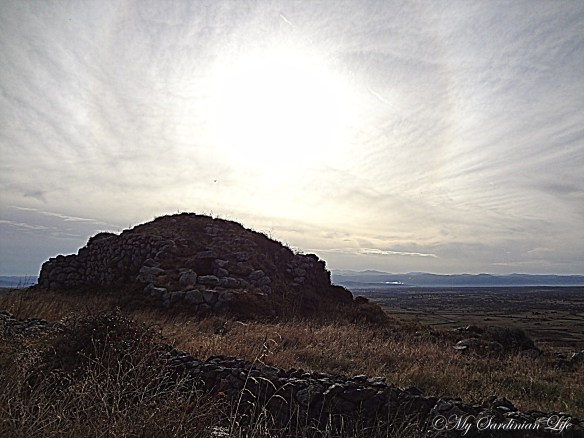
Good morning from the heart of Sardinia.
This is my response to the weekly photo challenge: good morning

Good morning from the heart of Sardinia.
This is my response to the weekly photo challenge: good morning
 It’s easy to find this 15 meter waterfall in the municipality of Martis, Sardinia, Italy. Lucky for us there were plenty of signs posted along the side of the roads indicating: Cascata Triulintas. After driving down a long, dirt road you will come to a dead-end and it’s from here you must walk the 10 minutes it takes to reach the waterfall. There are no signs indicating a parking lot. We just pulled up, parked and walked. We also happened to be the only people visiting the waterfall – it was splendid and great for snapping photos. It’s too bad that my camera’s battery died the moment we arrived at Cascata Triulintas as I only grabbed one photo, the rest are my friends’ shots.
The sacred well of Predio Canopoli in the historical town center of Perfugas dates back to the Nuragic civilization that dominated the island of Sardinia from the Bronze Age (18th century BC) to the 2nd century AD.

The sacred well is part of a larger complex which includes the remains of a stone fence. The well was accidentally discovered in 1923 by the land owner who was probably searching for clues to the mysterious Nuragic period (there is very little documentation showing how the nuragic civialization survived, most are hypothesis and theories).
Twenty-five kilometers east of Sassari, in the sprawling center of the Anglona region, lays the stunning small town of Martis. It is here you will find the magnificent Petrified Forest of Carrucana – Foresta fossile di Carrucana.


This gallery contains 3 photos.
Sardinia is more than just stunning beaches and emerald coasts. Have you ever wondered what it’s like on the inside? Follow me on a photographic journey to explore Sardinia from the inside. Grazing sheep inside the confines of their mountains … Continue reading
There is very little information on the history of Castello dei Doria, but what remains clear is: this magnificent castle perched on the hill of St. Matthew in the province of Sassari, Sardinia is a stunning piece of medieval history and a must-see for every traveler to the area. Admission free, with panoramic views all around.
The castle was named after Eleanora of Arborea‘s mother-in-law Giacomina Doria. Eleanora of Arborea is a renowned heroin to many of the islands’ residents. From 1383 to her death, she was one of the most powerful judges in Sardinian history.
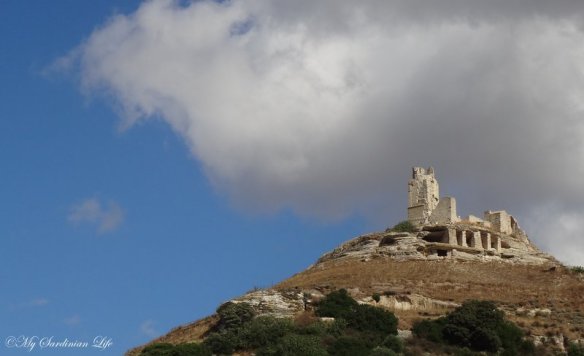
It’s an impressive building dating back to the 12th century when the Doria family (originally from Liguria) had it built as part of their defensive line in the historical region of Anglona, Sardinia.
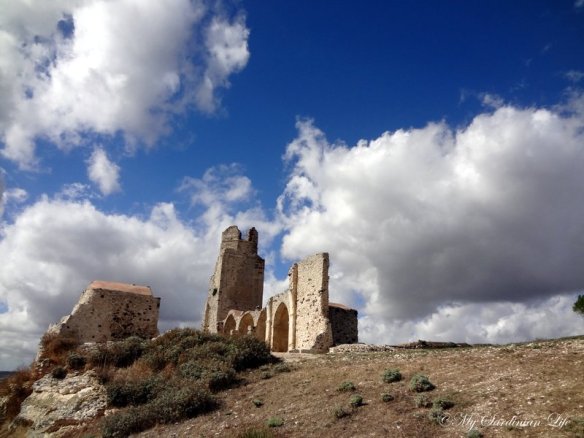
There are a number of castles and towers all over Sardinia which were built in medieval times to protect against attacks and thieves; like the ruler of Arborea, Mariano IV, who longed to own the castle, as well as King Peter IV of Aragon who in turn, hoped to gain possession of the castle thanks to a marriage in which he had close relations.

In 1448 the castle was transformed into a church – The Parish Church of St. Matthew – San Matteo, Chiaramonti. Today it dominates the valley below with spectacular views from north to south.

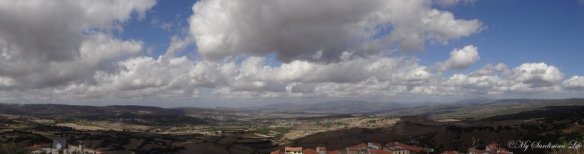

Castello dei Doria is rich in legends, story and war. Left for the spirits to tell the tales for a hundred years and more.
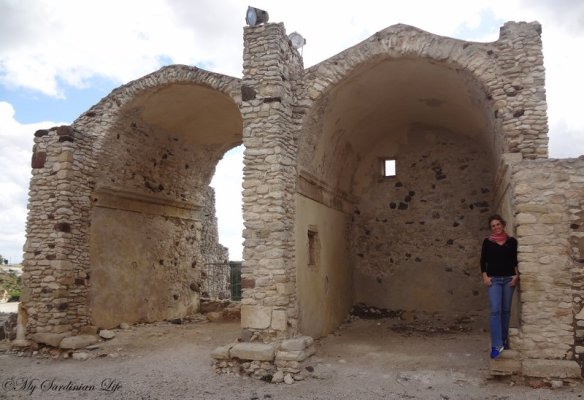
During my research for this article I found that this castle has, and does go by several names:
Have you seen this stunning gem perched high up in the Sardinian sky?
Source: Sardegna.Blogosphere
Sardinia is one of the most geologically ancient bodies of land in Europe and in the picturesque province of Sassari lays the prehistoric, megalithic, ziggurat of Monte d’Accoddi.
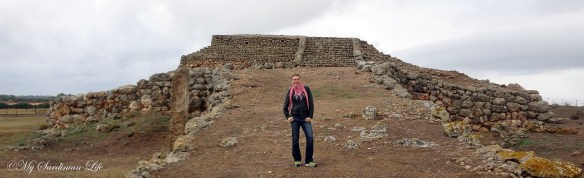
This megalithic structure dates back to 4000 – 3,650 BC, and was just discovered fifty-nine years ago! It’s been described as an altar, temple or step pyramid.
Reconstruction of the altar started in the 80’s with commission to re-build the top-level of the altar and the straightening of the menhir, which was found on its side.
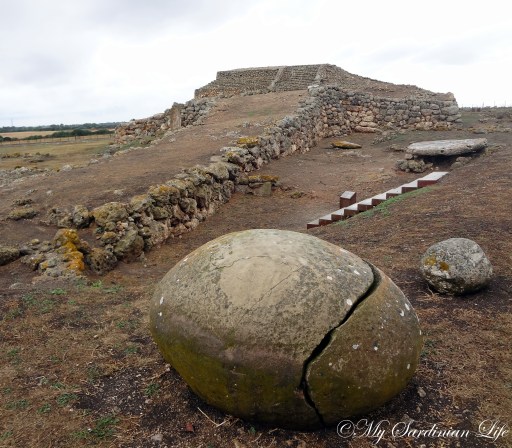
Monte d’Accoddi, Sardegna, Italia
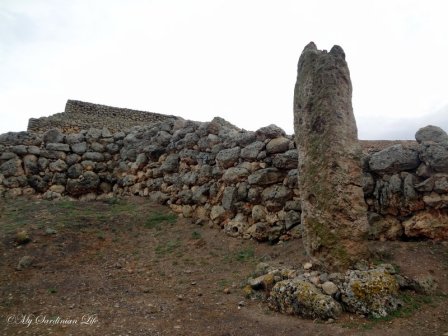
Menhir, Monte d’Accoddi
The gigantic oval stone “was brought to the site years after the altar was discovered in 1954.” Said someone at the site.

Oval stone at Monte d’Accoddi
I’m left questioning … “what was really going on at this giant prehistoric altar?”
To me, the menhir symbolizes strength within a society – man, whereas the oval stone is the entrance to the gateway of life – woman.
Ponder this while you take in the view from the top of Monte d’Accoddi.

What happened at Monte d’Accoddi?
P.S. Sardinia not just breathtaking beaches and emerald coasts.
Sources:
Tharros.info – Photo Gallery Prehistorical altar of Monte d’Accoddi
Wikipedia – Monte d’Accoddi
 My Sardinian Life